
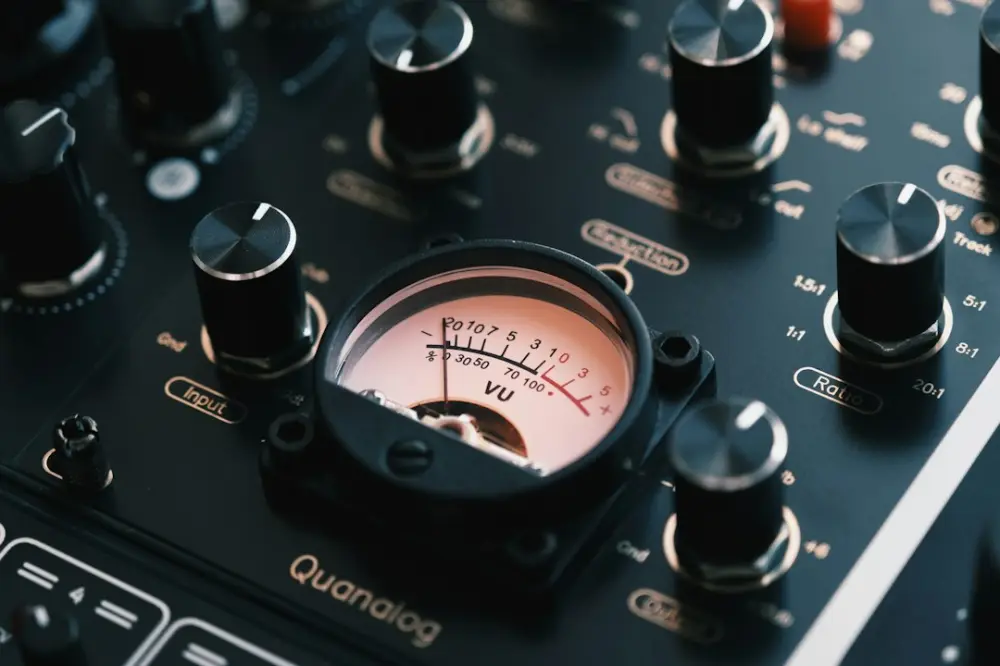
Loudness standards for digital music distribution are technical specifications, primarily measured in LUFS (Loudness Units Full Scale), that ensure consistent volume levels across streaming platforms. These standards prevent jarring volume jumps between tracks by using normalization, requiring producers to balance integrated loudness, true peak levels, and dynamic range for optimal playback in 2026.
When preparing audio for streaming and digital, the goal is no longer to make a track as loud as possible. Instead, the focus has shifted toward maintaining clarity and punch. If a master is too "hot," a streaming service's algorithm will simply lower the gain, potentially leaving the track sounding flat compared to more dynamic competitors.
Historically, the "loudness wars" pushed engineers to use heavy limiting to maximize volume. However, the adoption of the ITU-R BS.1770 standard changed the game. This standard provides a method for measuring perceived loudness rather than just electrical signal peaks. By 2026, every major distributor—from Spotify to Apple Music—uses some form of this measurement to level the playing field, ensuring that a folk ballad and a heavy metal track can exist in the same playlist without the listener reaching for the volume knob.
Measuring Integrated Loudness and True Peak
To meet these requirements, producers must focus on two primary metrics: Integrated LUFS and True Peak. Integrated loudness is the average volume of an entire track from start to finish. It ignores short bursts of noise and focuses on how the human ear perceives the overall energy of the audio. Most streaming platforms target an integrated loudness of -14 LUFS, though some, like Apple Music, default to -16 LUFS when their "Sound Check" feature is enabled.
True Peak (dBTP) is equally critical. Unlike traditional sample peaks, True Peak measurements account for inter-sample peaks that occur during the conversion from digital to analog signals. If a track is mastered too close to 0.0 dBFS, the transcoding process into lossy formats like Ogg Vorbis or AAC can cause audible clipping. In 2026, the industry standard is to keep True Peaks at or below -1.0 dBTP. This provides enough headroom for the platform's encoders to work without introducing distortion.
Using a dedicated loudness meter, such as the Youlean Loudness Meter or iZotope Insight, allows you to monitor these values in real-time. For example, a producer working on a podcast might notice their integrated loudness is sitting at -20 LUFS. To meet distribution standards, they would need to apply gentle compression and gain to bring the average up while ensuring the True Peak does not exceed the -1.0 dB limit.
AES Recommendations and Streaming Targets
The Audio Engineering Society (AES) provides the technical foundation for these standards through documents like AES TD1008. These recommendations help developers and engineers maintain consistency across different playback environments, from mobile devices to high-end home theaters. While each platform has its own internal rules, most have converged on a narrow range of targets to simplify the mastering process.
- Spotify: Targets -14 LUFS with a -1 dBTP ceiling. They offer "Loud," "Normal," and "Quiet" settings for users, but the -14 LUFS target remains the baseline for the "Normal" setting.
- Apple Music: Uses -16 LUFS. Apple’s infrastructure is unique because it uses its own proprietary metadata to manage volume rather than destructive gain reduction.
- YouTube: Normalizes to -14 LUFS. If your video or track is louder than this, YouTube will simply turn it down, which you can verify by right-clicking a video and selecting "Stats for nerds."
- Tidal: Generally targets -14 LUFS but offers high-resolution tiers that prioritize dynamic range.
It is important to remember that these platforms generally only turn audio down. If your track is mastered at -18 LUFS, Spotify may not necessarily boost it to -14 LUFS, depending on the user's settings and the platform's specific peak-limiting policies. Therefore, hitting the -14 LUFS mark is often the safest bet for modern music production.
Balancing Dynamics with PSR, PLR, and LRA
Loudness is not just about the average volume; it is also about the relationship between the loudest and quietest parts of the track. This is where metrics like Loudness Range (LRA) and Peak-to-Loudness Ratio (PLR) become essential. LRA measures the statistical distribution of loudness within a track, helping you understand if your song is too compressed or too dynamic for a specific medium.
Peak to Short-term Ratio (PSR) is a tool used during the mixing stage to ensure that individual sections of a song maintain their "impact." For instance, if a drum hit is buried under a heavy limiter, the PSR value will drop, indicating a loss of micro-dynamics. A healthy PSR (usually above 8 or 9) ensures that the transients—the initial hit of a snare or the pluck of a string—remain sharp even after the track is normalized by a streaming service.
Ensuring audio accessibility is finally becoming a priority for those producing spoken-word content often involves managing LRA more strictly than in music. In a podcast, an LRA that is too wide means a listener in a car might hear the host clearly but lose the guest's voice in the road noise. Keeping the LRA between 3 and 5 LU is a common goal for vocal-centric audio to ensure intelligibility across all environments.
Mastering for Genre-Specific Requirements
While the -14 LUFS target is a universal benchmark, different genres require different approaches to energy. An EDM track intended for a club environment might be mastered at -6 or -8 LUFS for the DJ to use, knowing that the streaming version will be turned down by the platform. In this scenario, the producer accepts the gain reduction because the "dense" sound is part of the genre's aesthetic.
Conversely, classical music or jazz often sits much lower, sometimes at -18 or -20 LUFS. In these genres, preserving the natural dynamic range is more important than hitting a specific loudness target. If a symphony is squashed to -14 LUFS, the quiet woodwind passages will sound unnaturally loud, and the crescendos will lose their emotional power. Producers in these fields often choose to ignore the -14 LUFS target in favor of sonic integrity, trusting that the platform's normalization will handle the playback volume appropriately.
For spoken-word audio, such as audiobooks or instructional content, the industry standard often leans toward -16 LUFS. This provides a slightly more robust signal that stands out in mobile listening scenarios while still adhering to the ITU-R BS.1770 recommendations for broadcast-quality audio. Consistency is the priority here; the listener should not have to adjust their volume between chapters.
Loudness Optimization: A Practical Exercise
Optimizing your audio for 2026 distribution is an ongoing exercise in balancing technical constraints with creative intent. The first step for any producer is to move away from "peak-only" monitoring. By integrating a loudness meter into your master bus from the beginning of the mixing process, you can see how your EQ and compression choices affect the integrated LUFS over time. This prevents the need for drastic, destructive limiting at the final stage of production.
A practical takeaway for today’s environment is to master for the best possible sound first, and the target second. If your track sounds perfect at -12 LUFS and still has a True Peak of -1.0 dBTP, let the streaming platforms do their job. They will lower the volume, but your dynamics will remain intact. The worst-case scenario is over-compressing a track to reach a "competitive" volume, only to have the platform turn it down and reveal the lack of life in the mix.
At Superlative Music, we believe that understanding these technical nuances is what separates a professional production from an amateur one. Whether you are mixing a complex musical arrangement or editing a high-stakes spoken-word piece, adhering to these loudness standards ensures your work is presented with the clarity and professional polish that modern audiences expect. By mastering the relationship between LUFS and True Peak, you protect the emotional impact of your audio across the entire online space.